
Medical Infusions
So you read somewhere that a certain herb is great for whatever symptom ails you at the time… and off you go to grab tea
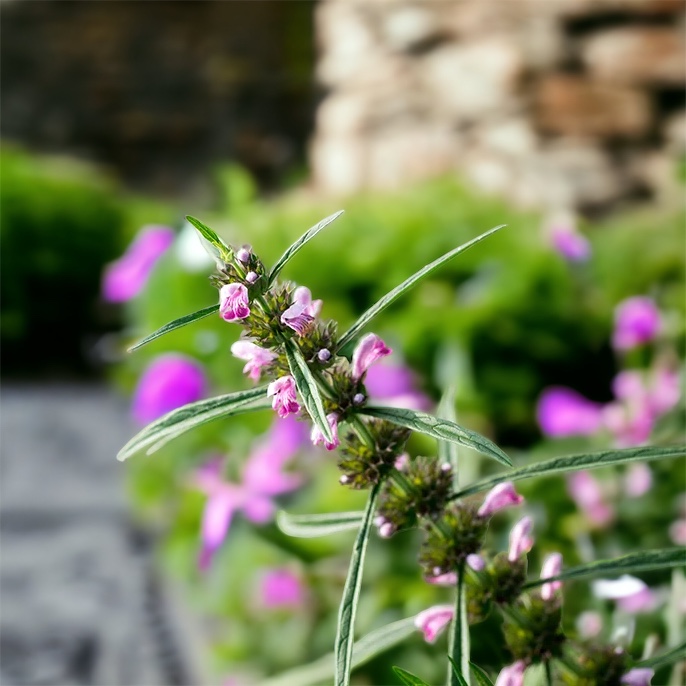
Let me first preface this by saying, always consult a medical professional before trying any herbal remedy.
Ok now that we have that out of the way, let’s chat about this wonderful herb. Did you know that the early Greeks gave Motherwort to pregnant women suffering from anxiety? The warnings related to Motherwort’s use during pregnancy come from studies on its constituent Leonurine, which has increased tone and contractions in isolated uterus muscle aka uterine contractions. The German Commission E advises that there are no known contraindications for this herb in pregnancy, and that Motherwort has been used as nervine for anxious pregnant women for many centuries. Herbalist Kathy Eich explains that because Leonurine is an alcohol soluble alkaloid, infusions are safe to use in pregnancy. Avoid tinctured remedies in this instance.
Classified as a nervine herb it has many uses, for many it is a profoundly relaxing and healing herb. Emotionally it supports us through life’s feelings of bitterness and betrayals. A favourite quote from Bloesem Remedies :
“For those who don’t feel at home in their family and on earth and easily feel under attack. When it has not been possible to receive the warmth and love of the family and as a result you become hardened, rigid and feel like a stranger on the earth. When you have the feeling that you cannot open your heart in the specific environment you are living in… helps you to stay open to the love and support of family and friends in the here and now. It is particularly good for letting go of the fear of being hurt.”
Motherwort has been associated with longevity and according to folklore it is said to drive away “wicked spirits”. With every herbal remedy you will find a little folklore to go with the science. Personally I like to embrace both.
History has shown it used to warm and dry up the cold humours, to digest and disperse them that are settled in the veins, joints and sinews of the body and to help cramps and convulsions, as mood enhancement, PMS banishment and deep calming. It’s very much a female centric list.
Atrological herbalism is another passion of mine. This means eachplant has an affinity for a planet, in this case Motherwort has an affinity to Venus (Venus owns this herb and it is under Leo).
From an emotional standpoint there may be no better herb to drive melancholy vapours from the heart, to strengthen it and make the mind cheerful, blithe and merry… The very name tells the story. Genus and Species: Leonurus cardiaca, lets break this down: cardiaca or the Greek kardiaca, or heart. Leonurus comes from the Greek leon for “lion” and ouros for “tail”
It has been commonly used to treat spastic colic, epilepsy, fever (with nervousness and delirium), spinal irritation, disturbed sleep, and restlessness. Some herbalists classify motherwort among the “loosening medicines,” i.e. those having a relaxant effect on muscles, tendons, ligaments, and membranes and capsules over organs, when these are distended or stretched by dryness, cold, fullness of humours or swellings. Because of this, Motherwort was frequently used for amenorrhea from cold, anxiety, or palpitations. It can shift a stuck pattern of tension in the heart or in the smooth tissue of the womb as it eases cramps (including the afterpains of childbirth) & calms PMS. It increases circulation, moves blood which helps move along scanty, stuck menstruation, assists in the healing of some types of vaginal atrophy, and improves slow, sluggish digestion (which we know is connected to hormones and menstruation. It’s a lovely herb for postpartum depression and anxiety. A review of the pharmacology of Motherwort, “a spasmolytic effect on the smooth muscles of the gastrointestinal tract justifies the use… in spastic colic, which results in the weakening of intestinal motility, manifested as digestive disorders, bloating, abdominal pain and recurrent constipation.”
As someone who has experienced a racing heart I was intrigued by this herb. It’s ability to calm heart palpitations caused by anxiety and hyperthyroidism made it a staple in my practice. For women it has this ability to bring on delayed or suppressed menstruation, and to ease menopause-related hot flashes, night sweats, and anxiety.
Dosage:
Hot or cold infusion (steaping 20 – 30 minutes) of 1 oz dried herb to a pint of water, taken 3 x a day.
Tincture 10 drops – 4 ml 3x a day. For longer term use you may lower dose.
According to Dr. Alschuler, “as a warm preparation, it relieves pelvic congestion and exerts antispasmodic action on the uterus. In cold preparations, it acts more strongly as a digestive tonic (especially on the stomach).” King’s Dispensatory states that externally, it may be used as a fomentation to the bowels in suppressed and painful menstruation. When other emmenagogues do not seem to work this preparation of motherwort may do the trick.
So you read somewhere that a certain herb is great for whatever symptom ails you at the time… and off you go to grab tea
