Medical Infusions
So you read somewhere that a certain herb is great for whatever symptom ails you at the time… and off you go to grab tea

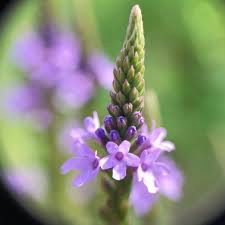
Blue Vervain is one of the staple herbs found in our She’s Nervy tincture. While it has many uses (including as a bitter herb), we use it for more of it’s relaxing nervine properties.
Taste:
Did you know that herbs which are considered acrid (taste) are also known to be antispasmodic/spasmolytic/relaxant
Action:
Affinity:
Energetics:
Tissue states:
Pitta: Cooling means it will decrease Pitta. For those with a strong Pitta constitution this could be a good thing. For those who are strong willed, driven, burning the candle at both ends – type A people.
Vata: It both increases and decreases certain aspects. Since Vata is already cold and dry it will be aggrivated by this componant of this herb however what trumos this action is the relaxant portion. Since Vata is tense, blue vervain especially when combined to balance the cooling/drying aspect it will be great especially when they are extra tense. You can add a little ginger to warm it up if you find it too cold. Vata is wind, constantly moving and changing.
Kapha: This herb is not for this category. Due to Kapha already being cold and relaxed it doesn’t need the addition of more of what it already has. It will be more aggrivating.

Due to it’s nervine trophorestorative properties you may find that using this herb daily after a period of time makes you feel that your nervous system has become more resilient, less on edge and better adapted to stressors that life throws your way. It’s mild enough that it won’t make you sleepy but it will cut that edge both in high and even in lower doses. A little goes a long way with this one.
Blue vervain is known as a relaxant diaphoretic, it’s a nervine sedative and anti-spasmodic which works fabulously to relax tension in our peripheral vasculature (the part of the circulatory system that consists of the veins and arteries not in the chest or abdomen). When you are feeling irritable, experiencing a stress related tension headaches, muscle cramping, can’t sleep, feeling anxious or nervous, then this is the herb for you.
While it’s not as strong of a nervine sedatives as some other herbs like passion flower (also found in our She’s Nervy formulation), it is known to be uplifting which is great for the blues, depression and overall feelings of blah.
Another nice feature of this herb is that it is going to combat a nervous tummy. If you have digestive insufficiency associated with nervousness and tension then this remedy is for you.
Blue vervain also helps to relax smooth muscles (the muscles that surround organ systems) as well as skeletal muscles. Anywhere there are spasms (kidney stones, gallbladder, colic, digestive spasms etc).
We refer to blue vervain an “emmenagogue” – as it helps with amenorrhea (that is when we miss one or more cycles of our period) and dysmenorrhea (this is when we have severe or frequent cramping with menstruation). It relaxes the nerves and supports us through PMS, hormonal imbalances (but not a hormone balancer) and mood swings. It has the ability to help move what is stuck in the liver, which is part of our hormone detox pathway. Great for menopause with hot flashes (especially when we mix with motherwort and black cohosh). Helps with the cramping we get during our period (due to the antispasmodic effects) , lack of flow, PMS – irritability, frustration and anger along with food cravings. That PMS craving is no joke! Some women have a harder time during the second half of their cycle (which is dominated by progesterone) – this is great in those circumstances.
Men can use it too, difficulty becoming aroused, maintaining an erection. Believe it or not men can get stuck in their heads as well. This is great to get them back into their “feeling” rather their head. It has a beautiful pelvic affinity – regardless of female or male it will draw the energy downwards.
Dosage:
****Due to the emmenagogue component it is contraindicated for pregnancy**
****High doses can be emetic so stick to low, moderate doses. Tincture is better tolerated than infusions (tea)***
****No known herb to drug interactions as of January 2023, be sure to speak with your health care provider before starting any new herbal regime****
So you read somewhere that a certain herb is great for whatever symptom ails you at the time… and off you go to grab tea
